
In high-growth engineering environments, speed is often weaponized against quality. Teams race to push code to production, operating under the dangerous assumption that documentation is a luxury reserved for slower enterprises. This false dichotomy between shipping speed and architectural logging is exactly how companies end up trapped by legacy drag.
When engineering teams double or triple in size, their single greatest points of failure shift away from raw computing complexity toward institutional amnesia. Critical engineering architecture shifts occur during casual Slack conversations, emergency Zoom triage rooms, or quick GitHub pull requests. Without structure, the contextual boundaries behind those design iterations evaporate.
The Cost of Historical Amnesia
Consider a standard engineering crossroad: an engineering squad swaps out a highly synchronous HTTP communication channel for an asynchronous architecture powered by AWS SQS. At the time, the decision makes perfect sense—the payload processing volumes required decoupling to isolate resource exhaustion. However, two years later, during a major microservice migration, a new senior engineering hire observes the layout and brands it an overly complex architectural anti-pattern.
Without an unshakeable audit trail, the new team spends months refactoring the asynchronous pipeline back into a synchronous flow, only to inevitably hit the exact same structural walls that the original team defeated two years prior. This circular cycle represents a massive loss of capital, a catastrophic blow to morale, and a critical structural failure known as Technical Amnesia.
Applying Blast Radius to Architectural Choice
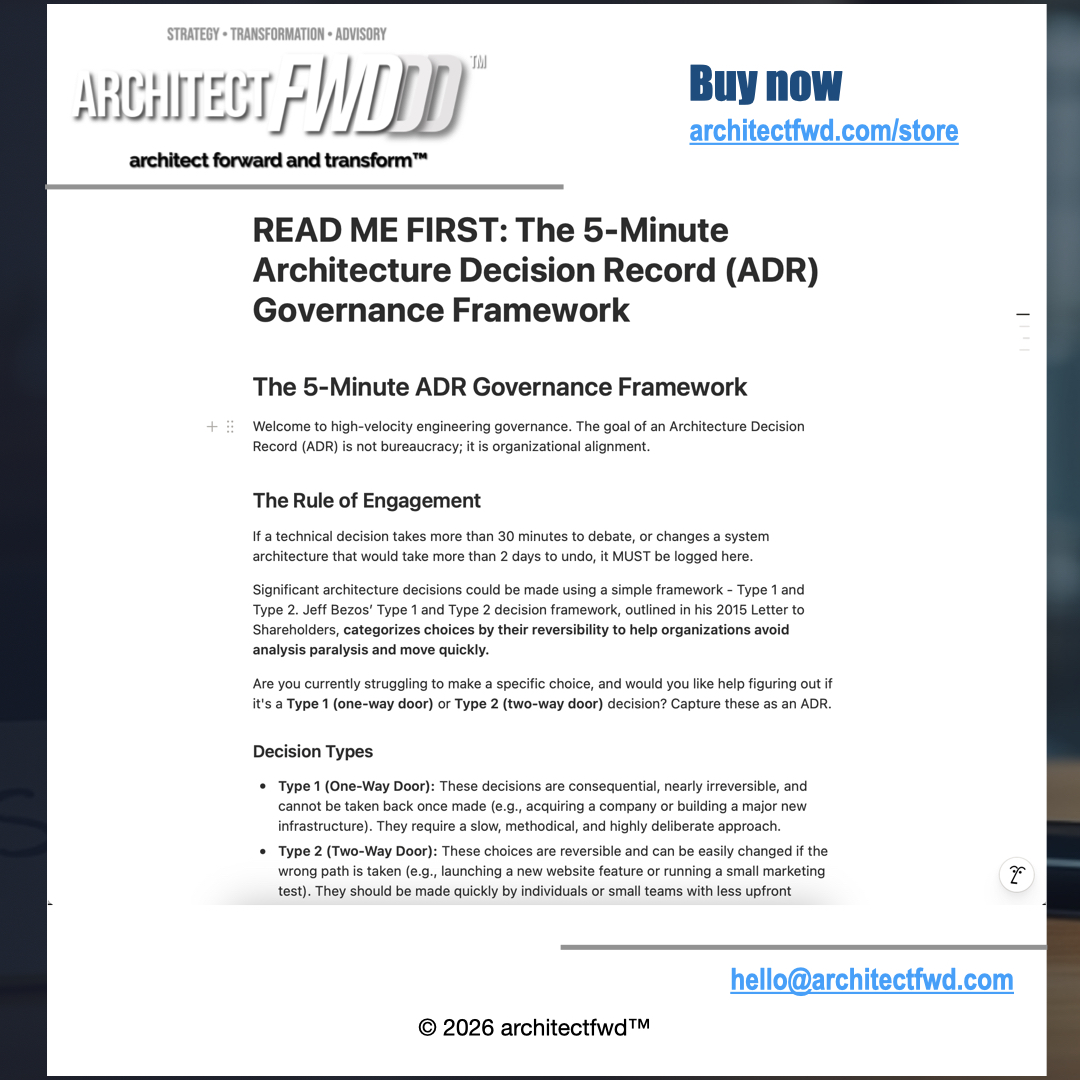
To fix this, technical leaders must introduce a lightweight framework that segregates decisions by risk and reversibility. We achieve this by mapping the classic corporate governance models into system choices: Type 1 and Type 2 decisions.
1. One-Way Doors (Type 1 Decisions)
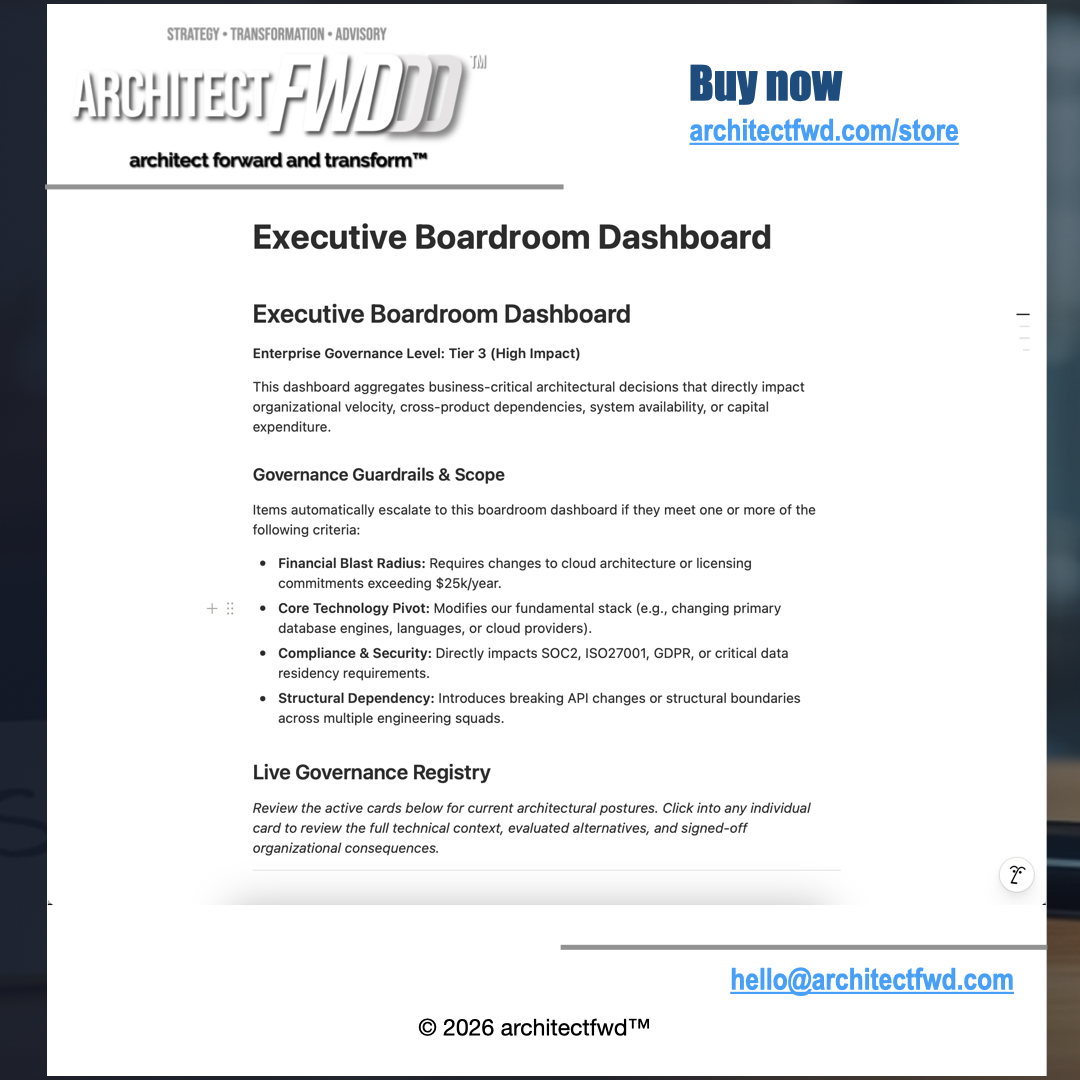
If you walk through the door, you cannot easily walk back. Swapping your primary database from PostgreSQL to DynamoDB, altering data residency protocols to meet strict compliance mandates like SOC2, or redesigning the core billing logic fall squarely into Type 1. These require heavy internal transparency, comprehensive validation, and mandatory logging in a record.
2. Two-Way Doors (Type 2 Decisions)
Choosing a specific logging package, establishing variable naming styles within a localized module, or selecting a front-end UI visual library are low-impact items. These shouldn’t face layers of committee approvals. Teams must execute Type 2 choices immediately to keep engineering velocity at its peak, logging them in a quick, two-line lean registry for future reference.
Implementing the Lean ADR Workflow
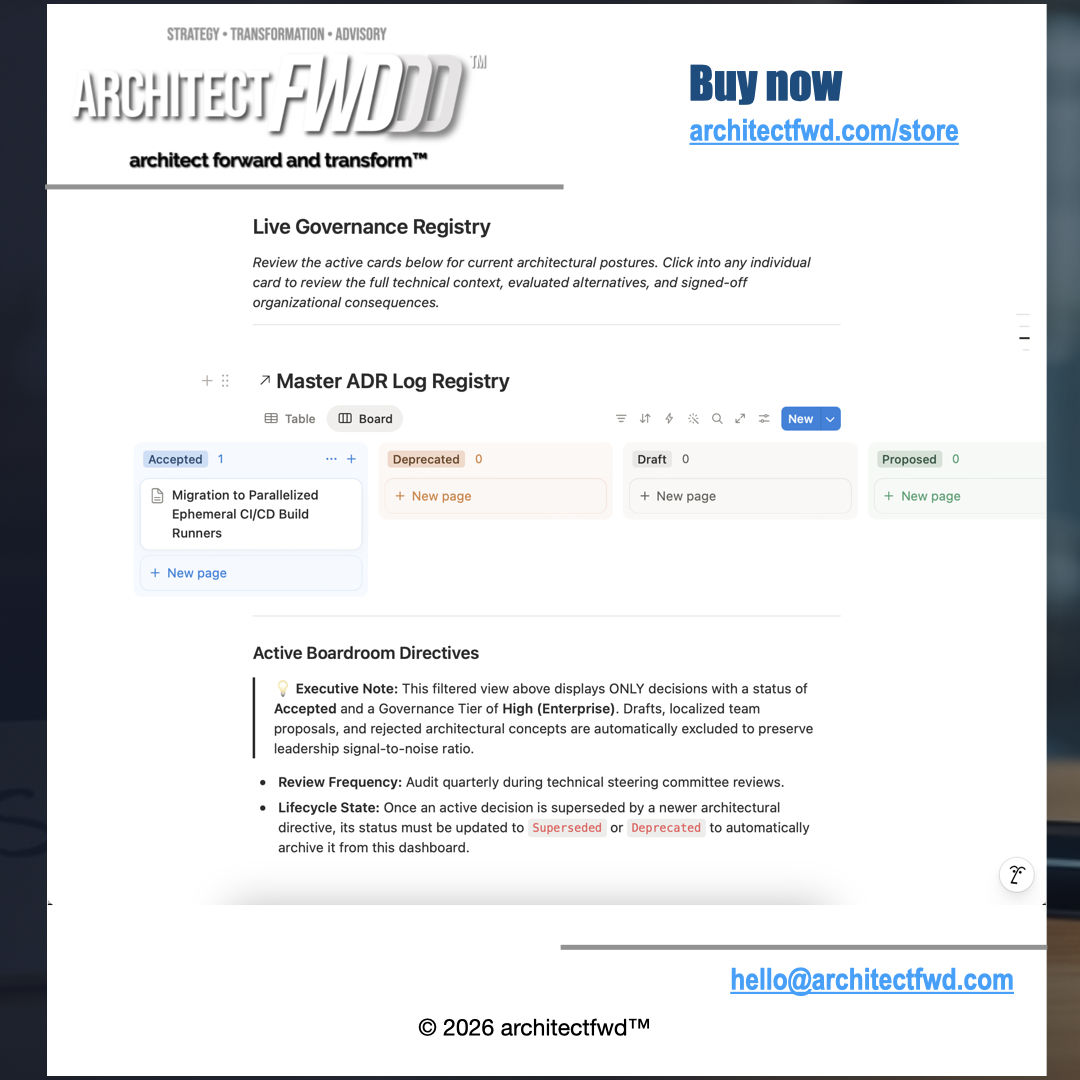
An Architecture Decision Record (ADR) should never read like an academic thesis. It is a lean, highly specific document. To succeed operationally, every record must capture exactly four core dimensions:
- Context: What real-world technical or business operational constraint forced this choice? What structural limitation did we encounter?
- Decision: What is the concrete, active technical step we are taking? Is it a Type 1 or Type 2 door?
- Consequences: What do we give up? (Every true architectural choice is a trade-off. If your ADR lists zero downsides, you haven’t thought deeply enough about the architecture).
- Status: Is this actively Proposed, Accepted, or has it already been Superceded by a subsequent design record (ADR-n > ADR-current)?
Strategic Alignment from the Code to the Boardroom
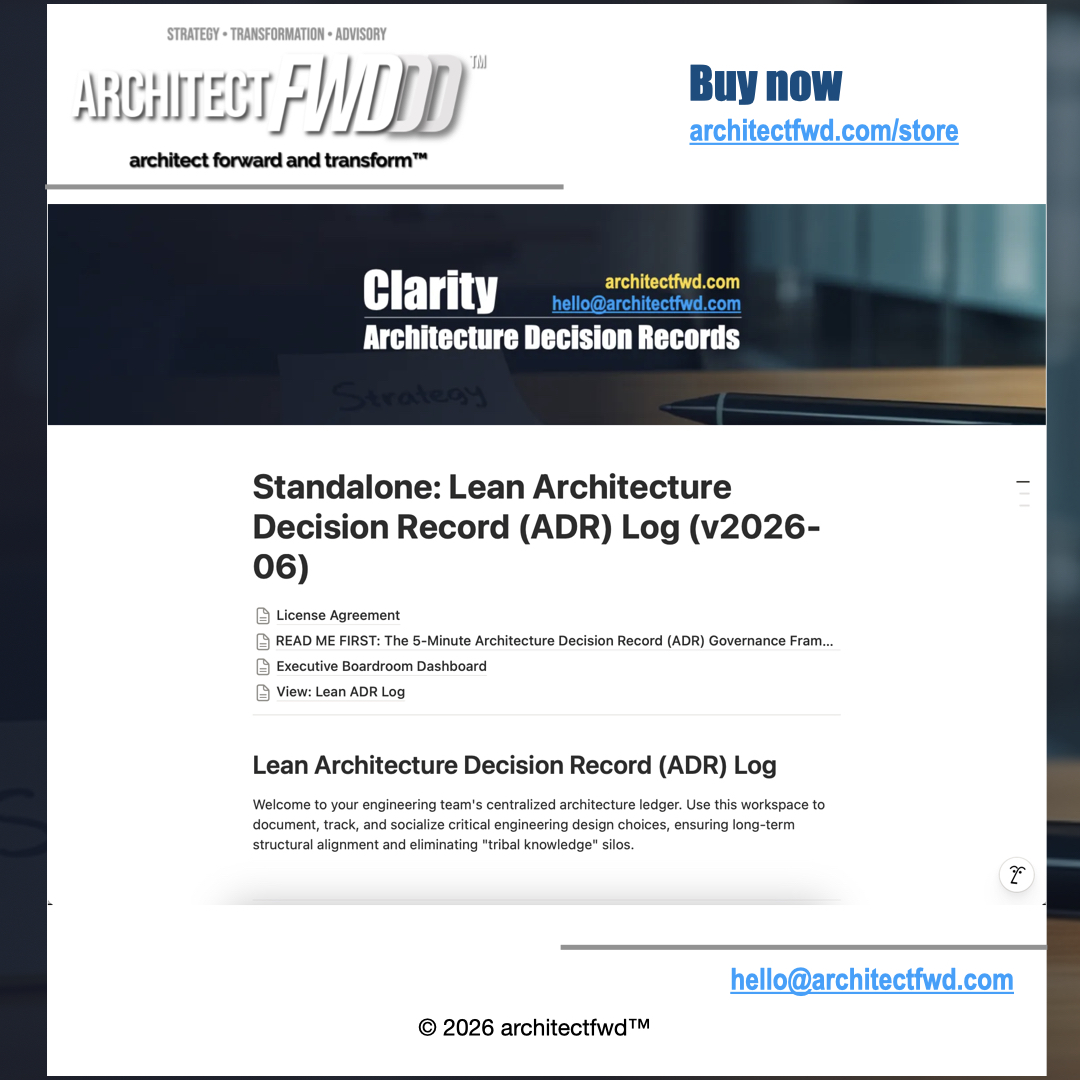
By forcing your engineering squads to maintain a clean, centralized ADR registry, you build a protective perimeter around your system velocity. New senior engineers get up to speed in days because they can read the chronological history of the system layout from ADR-001 to the present. More importantly, when executive leadership or external auditors question technical infrastructure shifts, you don’t offer vague hand-waving—you provide a transparent, high-context operational map.
Governance shouldn’t be a bureaucratic bottleneck. When done cleanly, lean governance is the ultimate accelerator.
Architect Forward and Transform.




24+ years experience in solving business problems and maximising opportunities through technology in a variety of industries, public and private sector internationally. I founded architectFWD™ to provide knowledge and trusted advice in the areas of strategy, technology, cloud and digital to enable organisations to become Digital Leaders.